The Allure of the Rook Move
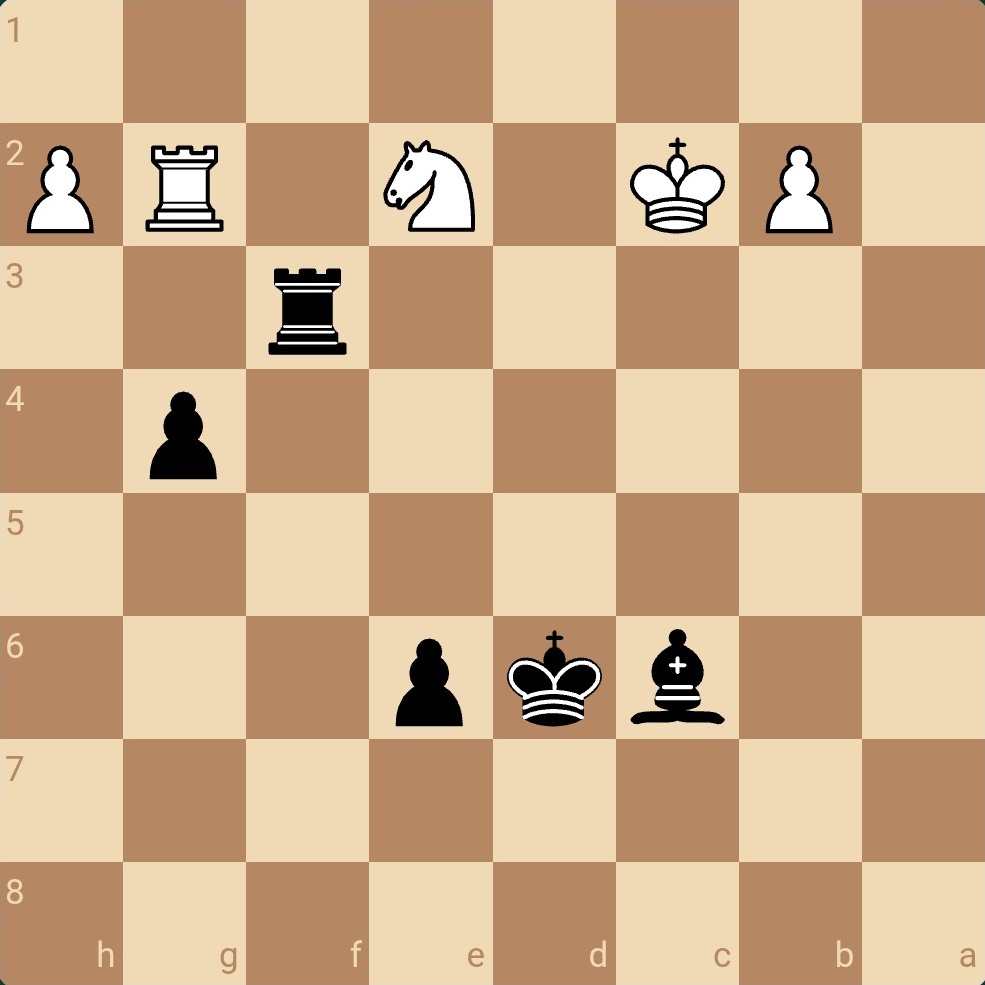
Black to play and faces a critical tactical decision. The geometry of the position immediately draws the eye to the long diagonal, where Black's bishop on c6 is lined up directly behind the f3 rook, aiming straight at White's rook on g2.
When solving this position, most players immediately selected a Black rook move as their first candidate, though they found the actual best move, 1...Be4+, shortly afterward. However, a few players, myself included, spent their time trying to make the immediate rook move work.
The Allure of the Rook Move
The idea behind moving the rook right away is this: By playing 1...Rf1 on the first move, Black unleashes a discovered attack from the c6 bishop against White's rook on g2. Since the White rook is now under attack, it has to move, and capturing the pawn with 2.Rxg4 is the most natural response. Black can then follow up with 2...Rf2, pinning the White knight on e2 against the king in the hope of winning the piece within the next few moves.
The flaw in this plan is that White has several ways to defend and save the knight, such as throwing in the intermediate check 3.Rd4+ or bringing the king closer. Because that plan falls short, the solution relies on a different idea: playing 1...Be4+ to force the White king onto a square where Black can follow up with a rook check that wins the g2 rook.
Reasons Why We Miss 1...Be4+
Reflecting on this puzzle brings up an interesting question about our calculation habits. Why is it possible to overlook 1...Be4+ in favor of moving the rook right away? Maybe the following possibilities explain this tactical blind spot:
-
•
The Trap of an Appealing Discovered Attack: Moving the Black rook immediately creates a discovered attack against the White rook on g2. This tactical motif looks so appealing at first glance that some players lock onto it and stop looking for alternatives.
-
•
The Sniper Bishop Bias: Many of us like to treat our bishops like snipers, keeping them effective from a long distance on squares like c6. Bringing the bishop right into the middle of the action on e4 feels unnatural when it is already eyeing the target from afar. In the past, I have similarly failed to consider rook lifts into the action, and it could be possible that these two habits are related.
-
•
The Desire for Forced Continuations: When calculating tactics, players often look for strictly forced lines. After 1...Be4+, the White king has three legal squares available to move to. Seeing three different replies could be enough to deter players who are looking for a forced continuation, causing them to dismiss the check too early.